Pages

Saturday, September 09, 2006

two houses

1805
一茶

家二ッ三ッ四ッ凧の夕哉
ie futatsu mitsu yotsu tako no yûbe kana

David’s English
flying from houses--
a two, threefour-kite
evening

And his comment
Shinji Ogawa notes that the numbers grammatically modify the houses, yet "the numbers influence the 'kites' also." He adds that the normal Japanese expression is to give just two numbers, "two, three," or "three, four," but here, "Issa uses three numbers to create special effects--to make the image more clear, the image of a tranquil and peaceful village."

sakuo comment

Tr,David said the kites are two, three, and four.
If you read this haiku with 5,7,5.,
the sentence is devided as follows,

ie futatsu
mitu yotsu tako no
yuube kana

The houses are two.

sakuo’s English

two houses
three, four kites
evening

sakuo Renku
二軒の家に元気な子達
niken no ieni genkina kotati

two houses and
cheerful children
.

Thursday, September 07, 2006

begger's party in grave yard


1795, age 33

一茶
乞食も護摩酢酌むらん今日の春
kojjiki mo gomazu kumuran kyô [no] haru

David’s English
even beggars toast
with sesame sake...
first of spring

his comment
I originally thought that this was a scene at a Shinto shrine. I was misled by the kanji with which Issa writes the word, goma; he uses the characters that signify "holy fire" instead of those that mean "sesame seeds." Shinji Ogawa set me straight. He adds that kumu, in this context, means "drink." The ending -ran changes the verb into a conjecture ("they may or may not be drinking"). In my re-translation, I use the verb "toast" in its simple, present tense, but Issa more exactly is saying, "perhaps even beggars may toast..." In English, the "perhaps" and "may" weaken the poem, so I've left them out.

sakuo comment.
sesame binegar is sake whick is used as secret language of priest.
護摩酢は僧侶の隠語で酒の事

Renku
お墓で正月、乞食のパーティ
ohaka de syougatu kojiki no paatii

New Year in the grave yard
beggar’s party.

Wednesday, September 06, 2006

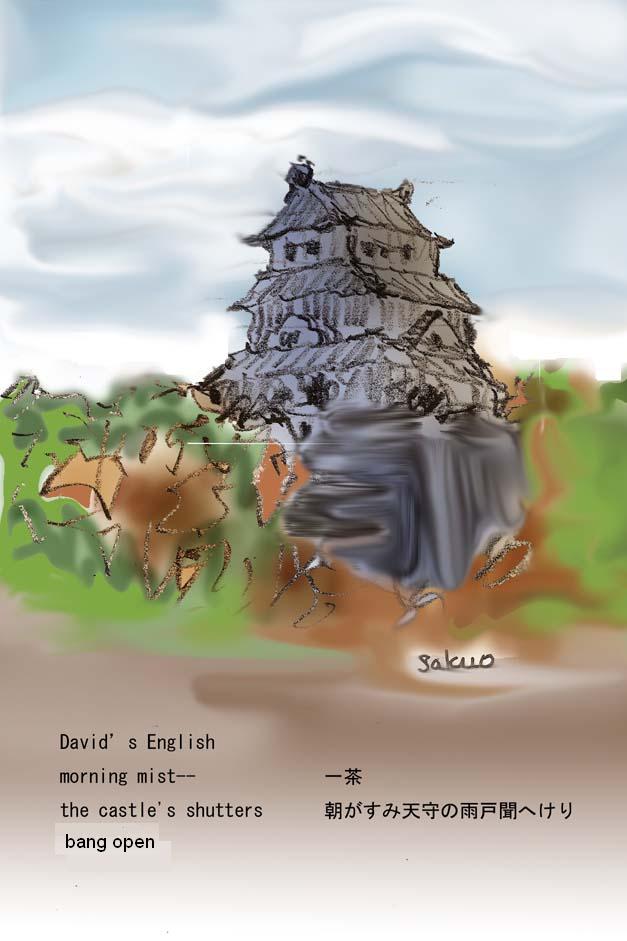
shutter open in the morning


1795, Age 33 He visits Matsuyama City.

一茶
朝がすみ天守の雨戸聞へけり
asa-gasumi tenshu no amado kikoe keri

David’s English
morning mist--
the castle's shutters
bang open

David’s comment
Literally, Issa says that the "shutter(s)" or "storm door(s)" can be heard. At first I imagined someone shutting them, but Sakuo Nakamura points out that in the morning the shutters would be opening.
In his translation, Makoto Ueda imagines the sound is a "creak"; Dew on the Grass: The Life and Poetry of Kobayashi Issa (Leiden/Boston: Brill, 2004) 34.

For your convenience.

天守
image
www4.airnet.ne.jp/kmimu/castle/kinki/hikonef0.jpg
http://www4.airnet.ne.jp/kmimu/castle/kinki/hikone_f0.html
Wikipedia
English
http://en.wikipedia.org/wiki/Keep
Japanese
http://ja.wikipedia.org/wiki/天守閣

Saturday, September 02, 2006

Come on Strike


1795, Age 33
He visits Matsuyama City.

一茶
つくづくと鵜ににらまるる鵜飼哉
tsuku-zuku to u ni nirama[ru]ru ukai kana

David’s English
the cormorants stare
at them hard...
cormorant fishermen

sakuo Renku
安い賃金ストをも辞せず
yasui tingin suto wo mo jisezu

cheap wage
come on strike 


About Photographs of Japan - Ukai Cormorant Fishing
http://www.phototravels.net/japan/ukai-cormorant-fishing.html

Thursday, August 31, 2006

yet couldn't bound


1819 age 56
一茶
犬の餅烏が餅もつかれけり
inu no mochi karasu ga mochi mo tsukare keri

David's English
one for the dog
one for the crow...
rice cakes

sakuo comment and renku
the year before his first daughter Sato is born.
1819 sixth month she dies. She lived only a year and a month.

されど娘の餅は搗けない
saredo musume no moti ha tukenai

yet couldn’t bound
rice cake for daughter

Wednesday, August 30, 2006

take it out on Buddha

1822 60 years old.

一茶
煤竹や仏の顔も一なぐり
susutake [ya] hotoke no kao mo hito naguri

David’s English&comment

bamboo soot broom--
Buddha's face too
gets a smack

Issa is referring to a statue of Buddha. Shinji Ogawa notes that susutake denotes "a bamboo broom for dusting." More specifically, it is a thin bamboo used for soot-sweeping; Kogo dai jiten (Shogakukan 1983

sakuo’s Renku & comment
1816 first son dies.
1819 Sato dies.
1821 second son dies

宝取られて仏に当たる
takara torare te hotoke ni ataru

being robbed of his treasures
take it out on Buddha
 Posted by Picasa

Tuesday, August 29, 2006

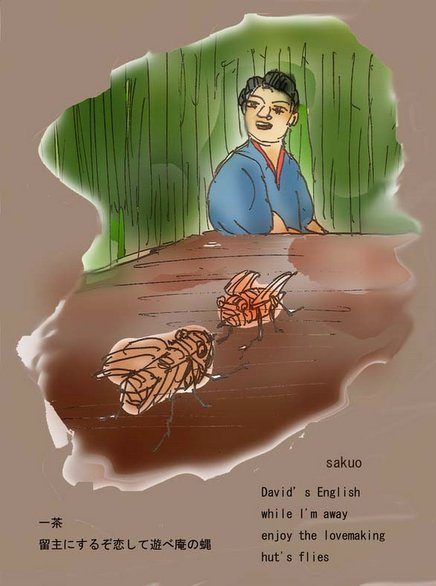
with my fly's child

1815
一茶

留主にするぞ恋して遊べ庵の蝿
rusu ni suru zo koi shite asobe io no hae

David’s English & comennt
while I'm away
enjoy the love making
hut's flies

This haiku was composed in 1815, a year during which Issa spent the majority of days traveling (despite the fact he married his first wife, Kiku, just the year before). In fact, Shinji Ogawa points out that Issa stayed home only 77 days the year he married Kiku.Lest someone think this was a sign that the marriage wasn't working, one should keep in mind that Issa needed to meet with his haiku students throughout Shinano Province and, from time to time, hobnob with poets in Edo (today's Tokyo).

sakuo Renku
我が蝿の子と貴方を待たん
waga hae no ko to anata wo matan

with my fly’s child
I’m waiting for you
 Posted by Picasa

Saturday, August 26, 2006

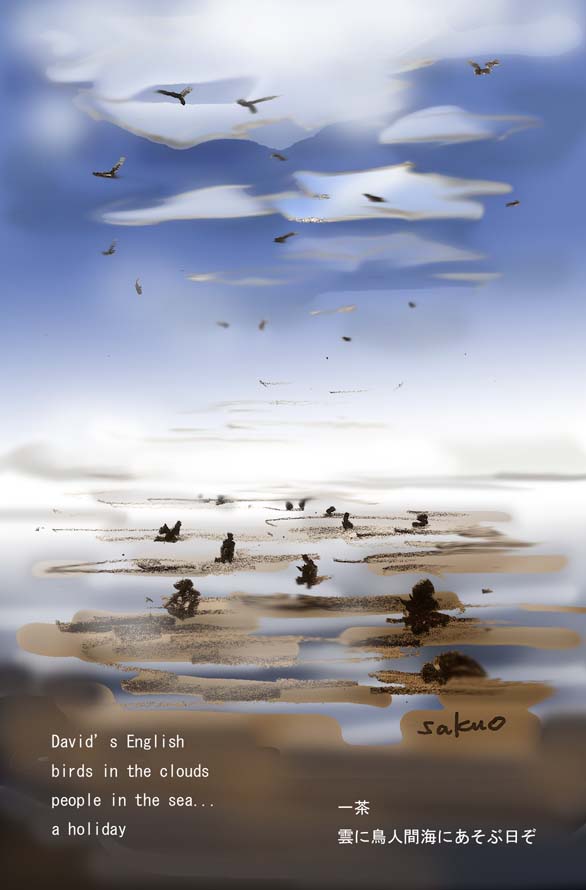
floating among heaven and earth


David’s English
birds in the clouds
people in the sea...
a holiday

一茶
雲に鳥人間海にあそぶ日ぞ
kumo ni tori ningen umi ni asobu hi zo
by Issa, 1793

Jean Cholley sees this as a scene of people gathering shellfish at low tide. At the end of Third Month seabirds have migrated north ("in the clouds"), leaving good pickings for the humans; En village de miséreux: Choix de poèmes de Kobayashi Issa (Paris: Gallimard, 1996) 234, note 9. Issa later (1795) revises this to begin with "larks in the sky" (ten ni hibari). Larks are not migratory birds.

visit http://cat.xula.edu/issa/

sakuo Renku
1793 Age 31 years on journey of Kyushyu

魂抜けて天地に漂う
tamashii nike te tenchi ni tadayou

my soul leaving from me
floating among heaven and earth

Wednesday, August 23, 2006

located on the sky

David’s English
and how old are you
Mr. Turtle?
Mount Fuji

kame dono no ikutsu no toshi zo fuji no yama
亀どののいくつのとしぞ不二の山
by Issa, 1812

The highest and most sacred of Japan's peaks, Mount Fuji, was the home of the great kami-sama or gods. Buddhists believed it was a mystical gateway between earth and heaven.
visit http://cat.xula.edu/issa/

sakuo Renku
御空におわす阿弥陀佛かな
misora ni owasu amida-butu kana

Located on the sky
Amida Buddha
 Posted by Picasa

Monday, August 21, 2006

one hand pets the dog

一茶
草餅や片手は犬を撫ながら
kusamochi ya katate wa inu wo nade nagara
by Issa, 1824

David’s translation & comment
eating herb cake
while one hand
pets the dog

The word "eating" doesn't appear in Issa's original, but this action can be inferred.
http://cat.xula.edu/issa/

sakuo Renku
1824, Issa is 62 years old. On May he married. After three months he divorce.
Preface;
Cake is symbol of appetite. What stands for the dog that lives together in his home. The dog is female, straightly symbol of sexual desire.

食気も色気も春なればこそ
syoku mo iroke mo haru nareba koso

eating and loving bloom
now is the spring
 Posted by Picasa

Sunday, August 20, 2006

Shinto deer celebrates

David’s English
Kasuga Field's deer
also attend, I see...
blossom-filled temple

一茶
春日のの鹿も立ちそう花御堂
kasuga no no shika mo tachi so^ hana mido^
by Issa, 1810

David’s Comment
Shinji Ogawa explains, "The Kasugano (Kasuga Plain or Field), famous for its deer, is located east of Kohuku Temple and south of Tôdai Temple."Gabi Greve explains that hanamidô ("blossom temple hall") is a miniature hall set up at Buddhist temples and decorated with colorful flowers on Gautauma Buddha's birthday, celebrated on the Eighth Day of Fourth Month. Small statues of the child Buddha are decorated with flowers, and hydrangea tea is poured over the statue by visitors. Here, the deer seem to be honoring Buddha along with the human visitors. Sakuo Nakamura points out that the deer is a "servant of the Kasuga Shinto shrine," and so its attendance at Buddha's Birthday festival is like "an Arab's camel visiting a synagogue."Sakuo's observation reminds us that Issa, like most Japanese, honors both Buddhism and Shinto. His religious sentiment is vast, deep, and non-exclusive.

sakuo Renku
Preface, the deer is a servant of Shinto-shrine, Kasuga Shrine.
hanami-dou(blossom-filled temple) is Buddha’s holly house.
Judging from religious point of view they are heathen each other.
According to western commonsense, it seems to be that Arab’s camel visit a synagogue.

神鹿祝う仏の誕生
shin-roku iwau hotoke no tanjyou

Shinto’s deer celebrates
the birth of Buddha.


visit http://cat.xula.edu/issa/ Posted by Picasa

Friday, August 18, 2006

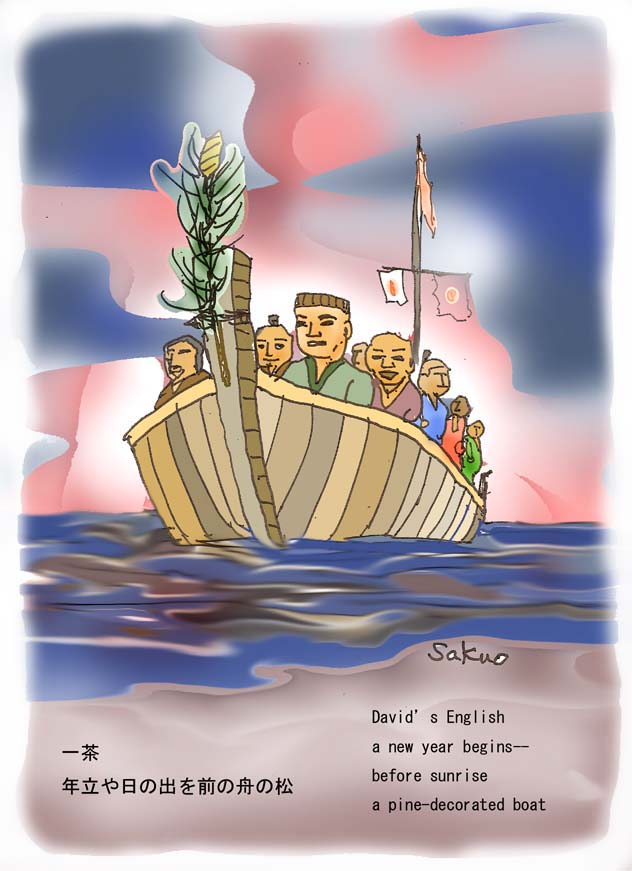
the sea of a haiku poem


David’s English
a new year begins--
before sunrise
a pine-decorated boat

toshi tatsu ya hi no de wo mae no fune no matsu
年立や日の出を前の舟の松
by Issa, 1805

43 years old, keeping activity in Edo, with excellent ku-friends making haiku vividly .

sakuo Renku
俳句の海へいざ船出かな
haiku no umi he iza funade kana

let’s embark for
the sea of a haiku poem.

Thursday, August 17, 2006

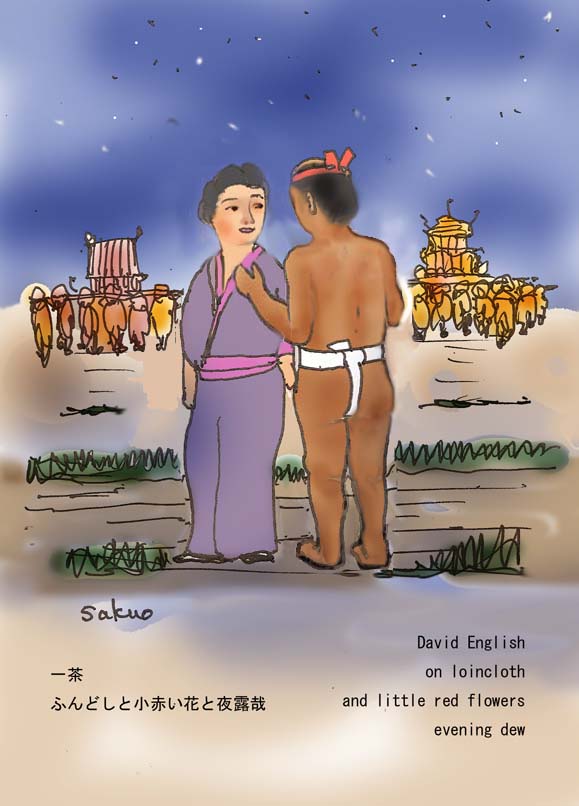
love romance


David English
on loincloth
and little red flowers...
evening dew

一茶
ふんどしと小赤い花と夜露哉
fundoshi to ko akai hana to yo tsuyu kana
by Issa, 1812 Age 50.

sakuo Renku
祭の夜の恋物語
matsuri no yoru no koi monogatari

love romance
at the night of festival

Wednesday, August 16, 2006

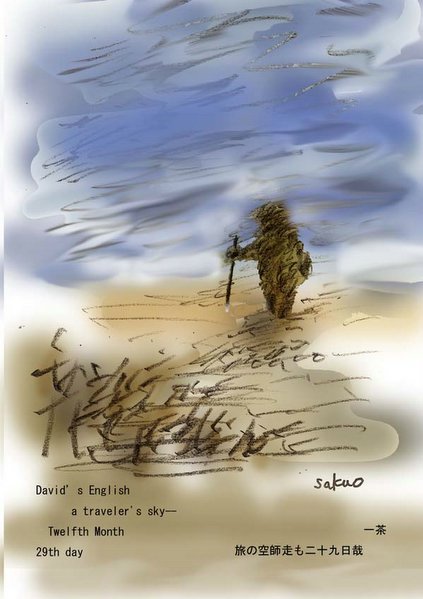
a traveler's sky

David’s English
a traveler's sky--
Twelfth Month
29th day

tabi no sora shiwasu mo ni ju^ ku nichi kana
旅の空師走も二十九日哉
by Issa, 1803
Age 41, living in Edo. visiting to Bousyo district, seeking new
haiku friends.

sakuo Renku
杖を頼りに今年も暮れる
tue wo tayori ni kotoshi mo kureru

depending on a stick
the year is ending
 Posted by Picasa

Saturday, August 12, 2006

ill lucks with soot

David’s English
my home village--
four or five years of soot
needs sweeping

furusato ya shi go nenburi no susu harai
古郷や四五年ぶりの煤払
by Issa, 1824

sakuo Renku.
In four or five years, Issa have lost 4 children and his wife.

溜まった不運煤と払い出せ
tamatsu ta fuun susu to harai dase

the collected ill lucks
paid out together with soot.

Friday, August 11, 2006

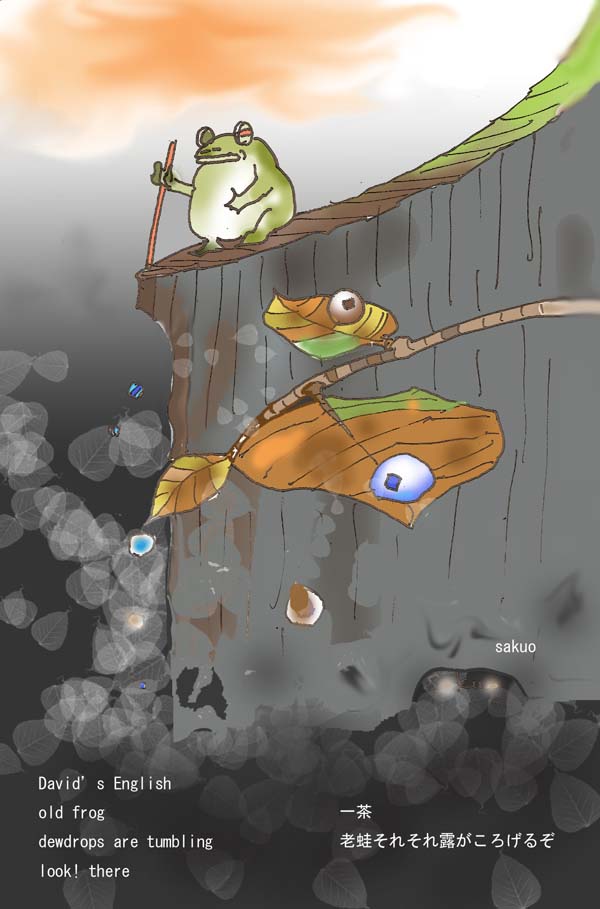
old frog

David’s English
old frog
dewdrops are tumbling
look! there!

oi kawazu sore-sore tsuyu ga korogeru zo
老蛙それそれ露がころげるぞ

by Issa, 1812
Age 50Eleventh Month, leaving Edo,
he returns to live in his native village of Kashiwabara. His dispute on inheritance has prolonged for11 years from his father’s death.

sakuo Renku
koroge otiru ya fuyu no sekai he
転げ落ちるや冬の世界へ
rolling and falling
to the winter world.

Monday, August 07, 2006

waiting in Edo

David’s English
my snow too
entrusted to join
Chikuma River

waga yuki mo tsure ni tanomu zo chikuma kawa
我雪も連に頼むぞ千曲川
一茶
by Issa, 1815
53 years old, last year married, leaving business in Edo.
In Autumn starting to Edo.

sakuo Renku
我を待つらん江戸の人々
ware wo matu ran edo no hito bito

waiting for me
acquaintance in Edo

visit http://cat.xula.edu/issa/ Posted by Picasa

Sunday, August 06, 2006

come arround me!


David’s English
even the cloudburst
shows the facing mountain
favoritism

yu^dachi mo mukai no yama no hiiki kana
夕立もむかひの山の贔負哉
by Issa, 1815
married the last year ,staying in home village, but he has business in Edo. In autum he went to Edo.

sakuo Renku
こちらにも来い今日の暑さ哉
kotira ni mo koi kono atusa kana

come around me
today’s the heat

Saturday, August 05, 2006

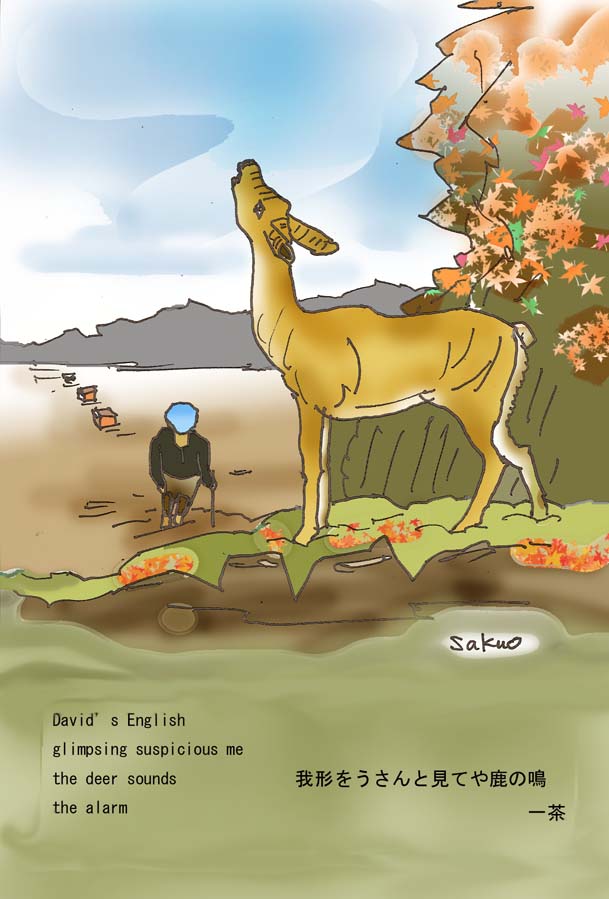
uneasy crossing the peak

David’s English
glimpsing suspicious me
the deer sounds
the alarm

waga nari wo usan to mite ya shika no naku
我形をうさんと見てや鹿の鳴
             一茶

Issa, 1820
Age 58
At the year before Sato dies.Tenth Month, 5th day, his second son, Ishitarô, is born.
After 3 months, he dies.

sakuo Renku
不安を誘うこの峠越え
fuan wo sasou kono touge goe

it makes me uneasy
crossing the peak

Thursday, August 03, 2006

metalic surface trial

This is the picture that is celebration of Issa's first daughter.
Same image has featured before with colors.

sakuo.

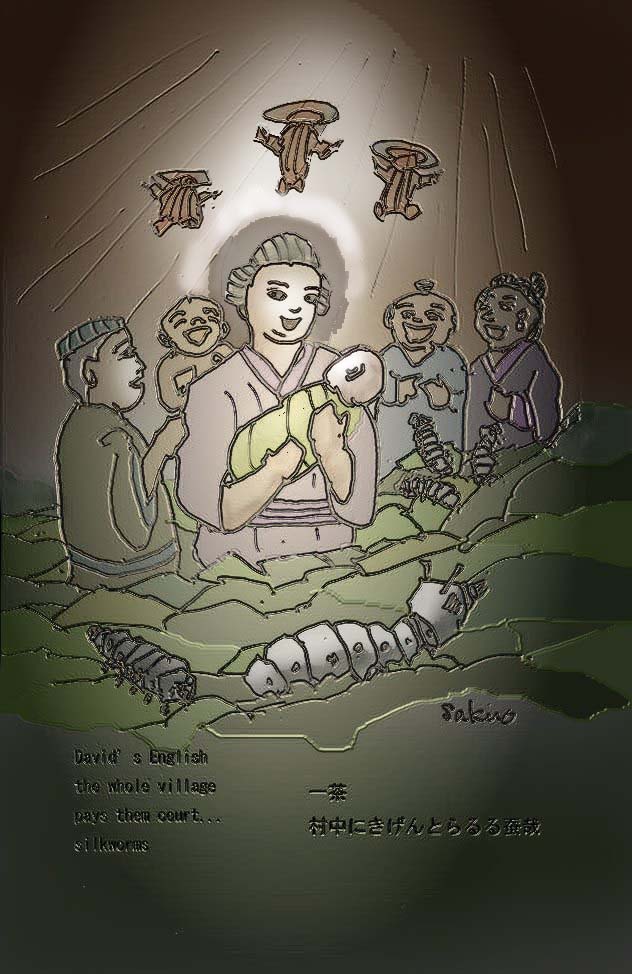
the birth of Angele

David’s English
the whole village
pays them court...
silkworms

mura naka ni kigen toraruru kaiko kana

一茶
村中にきげんとらるる蚕哉

by Issa, 1818

1818, Age 56
Fifth Month, 4th day, a daughter, Sato, was born.
His first and second sons have died soon after their birth.
People surround Issa celebrated a baby Sato who was an Angele
for Issa as well as surround.

sakuo Renku
minna iwau ya tenshi no tanjyou
皆祝うや天使の誕生

all villagers celebrate
the birth of Angele

Tuesday, August 01, 2006

only my trouble

David’s English
the sky colors
of dawn have changed
to summer clothes

曙の空色衣かへにけり    一茶
akebono no sora iro koromo kae ni keri
by Issa, 1807

sakuo Comment
1807 7th month Issa returned to home village for attending to father’s funnel patry held at 7 years later from father’s death.
The father said his assets should be divided even between Issa and brother.
But it has been not executed till now. How long has suffered Issa?

Renku
かわらぬものは我が難儀のみ
kawaranu mono ha waga nangi nomi

the unchangeable is
only my trouble

Monday, July 31, 2006

three belt story


shanna san, Sandy san,
here is my rest of the story on " three belts"
Don't you think it looks like Monet.

sakuo.

Sunday, July 30, 2006

thank you, Jasminka san

thank you ,Jasminka san for your helping me to make fine frame.
I downloaded Fast Stone Image Viewer that you have suggested me.
And choice this frame.
I will try it more on my Every day Issa

sakuo.

all gone to the next world


year unknown

一茶
かすむ日に古くもならぬ卒塔婆哉
kasumu hi ni furuku mo naranu sotoba kana

David’s English
in the misty day
not growing older...

grave tablets

sakuo comment
Dr, David said, the sotoba or "stupa" is a dome-shaped Buddhist shrine. In Japan the wooden plate that shaped “stupa” is also called “sotoba”
Every chance, we Buddhist stands sotoba in the grave yard for holding a service for a departed soul

Issa has cruel destiny.
From his age 54 to 60, Issa has lost 4 children and lastly his wife.
Every season of every year he had to stand sotobas.

Renku
一人残して皆あの世へ
hitori nook shi te minna anoyo he

leaving only me
all gone to the next world

Saturday, July 29, 2006

my wife died

1823
一茶

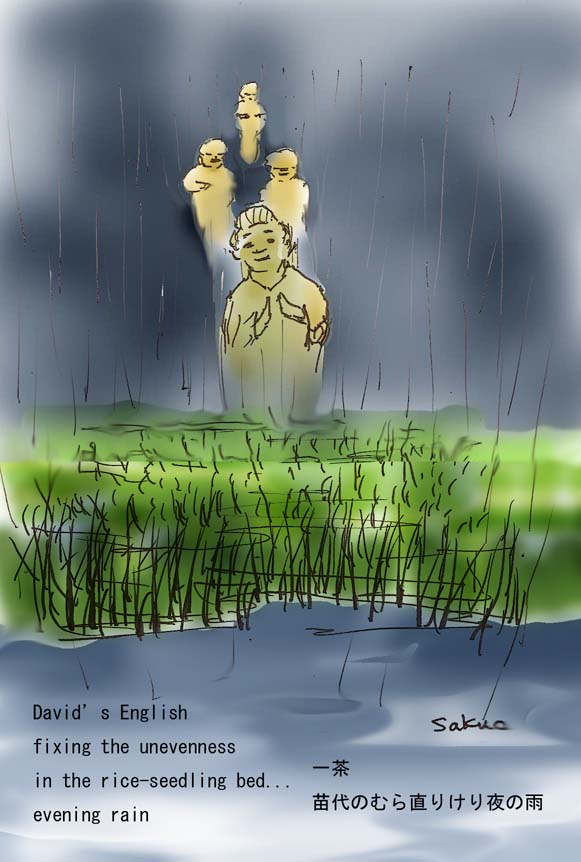
苗代のむら直りけり夜の雨
nawashiro no mura naori keri yoru no ame

David’s English
fixing the unevenness
in the rice-seedling bed...
evening rain

sakuo comment and Renku
His wife Kiku, has been ill since Feburaly, and dies on 12th day of Fifth Month,
When it is in the middle of rice planting.
The rice-seeding bed has been prepared before one month.
Kiku was earnest about planting rice in stead of Issa who was a wondering poet
She would say to Issa [ the bed is uneven] that Issa reminds with sorrows.

Renku
田植えを待ちし妻は亡し
taue wo matishi tuma ha nashi

longing for planting rice
my wife has died

Thursday, July 27, 2006

with warm friends


1820
一茶
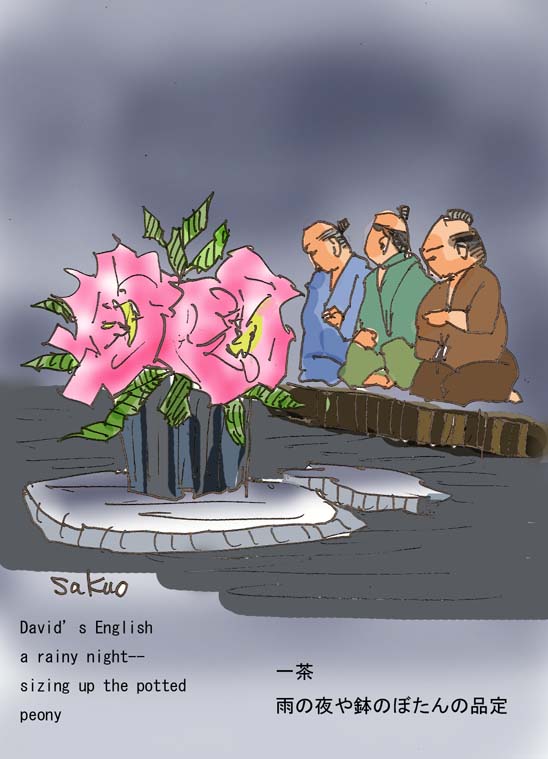
雨の夜や鉢のぼたんの品定
ame no yo ya hachi no botan no shinasadame

David’s English
a rainy night--
sizing up the potted
peony

sakuo Comment
Last year lovely daughter die.
I suppose that Issa made this ku in Naganuma where were there 10 his students.
And he could forget his sorrows among the haiku friends.

Renku
友としばしの憂さを忘れん
tomo to sibashi no usa wo harasan

with warm friends briefly
drown my sorrows

Wednesday, July 26, 2006

settle a quarrele

1824 Age 62, married with second wife, After 3 months he divorced.

一茶
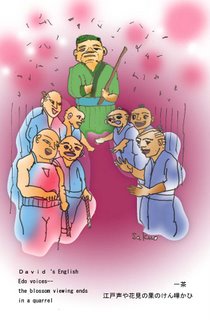
江戸声や花見の果のけん嘩かひ
edo-goe ya hanami no hate no kenka kai

David‘s English
Edo voices--
the blossom viewing ends
in a quarrel

David’s comment
In Issa's time the citizens of Edo (present-day Tokyo) were famously loud and argumentative.
http://cat.xula.edu/issa/

sakuo’s Comment and Renku.
fire and quarrel are the symbol of blooming Edo, said Edo proverb.
Edo was one million city as well as military city.
There were full of warriors and their supporter. Percentage of man and female
was 65%-35%. So it was full with activity.

Renku
止めに行かんかいざ信濃から
tomeni ikan ka iza sinano kara

let’s go to settle quarrel
from Shinano

Tuesday, July 25, 2006

puffer fish, delicous but poison

1803

一茶
どこを風が吹かとひとり鰒哉
doko wo kaze ga fuka to hitori fukuto kana

David’s English
to wherever
the wind may blow it...
a puffer fish

sakuo Comment
Puffer fish tastes very good, but is poison fish.
There were many gourmets who die by eating the fish.

Japanese old proverb said.
河豚は食いたし命は惜しい
fugu ha kuitasi inoti ha oshii

wish to eat puffer fish
but not to die


David’s Comment
Issa spells fukuto ("tetrodon" or "pufferfish") using the Japanese character for awabi ("abalone"). In this haiku, he puns with fuka to ("blows") and fukuto ("pufferfish"). He seems to be referring to a fish that has been caught and now will be sent to who-knows-where. Posted by Picasa

Sunday, July 23, 2006

unforgettable Edo !


1813
Age 51 Second Month, he is living in Kashiwabara in a rented house. In autumn, his inheritance dispute finally settled, he moves into his family home.

一茶
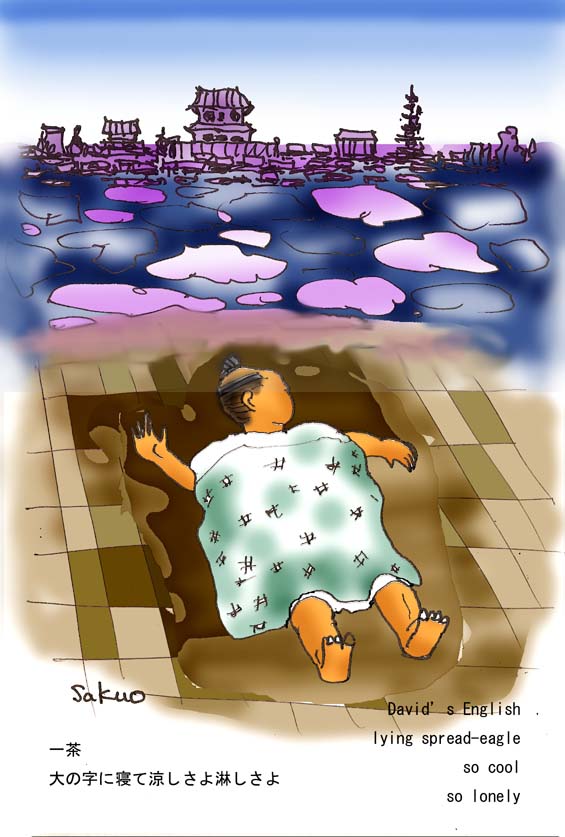
大の字に寝て涼しさよ淋しさよ
dai no ji ni nete suzushisa yo sabishisa yo

David’s English
lying spread-eagle
so cool
so lonely

comment
With arms and legs spread wide, the poet's body forms the Japanese character "big" (dai no ji)--the first word in the Japanese text of this poem.

sakuo Renku
[so cool] is his home village. [ so lonely] is here far from Edo city where he spent his 35 years.

江戸の賑わい忘れられず
edo no nigiwai wasure rarezu

the booming in Edo
is unforgettable

praying for rain

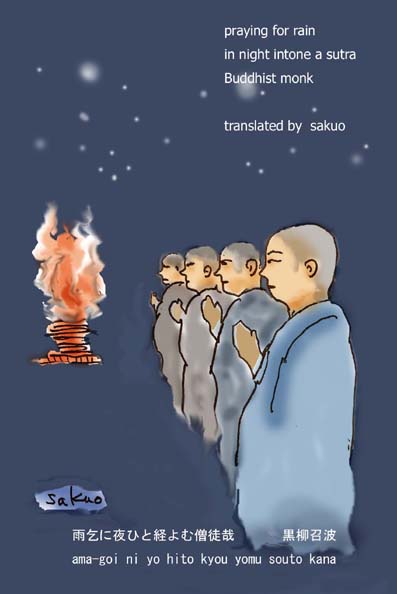
This is a photo up loaded to Narayanan's site.

Issa
雨乞に夜ひと経よむ僧徒哉
ame-goi ni yo hito kyou yomu souto kana

translated by sakuo
praying for rain
in night intone a sutra
Buddist monk

sakuo

Saturday, July 22, 2006

Rice tax is the half of harvest

1814 52 years old.

一茶
枯々や俵の山になく烏
karegare ya tawara no yama ni naku karasu

David’s English
winter withering
on a pile of rice bags
the crow caws

sakuo Renku
米の半分年貢で取られ
kome no hanbun nengu de torare

the half of the harvest
robbed as rice-tax

Thursday, July 20, 2006

return to Nature

1826 Age 64

一茶
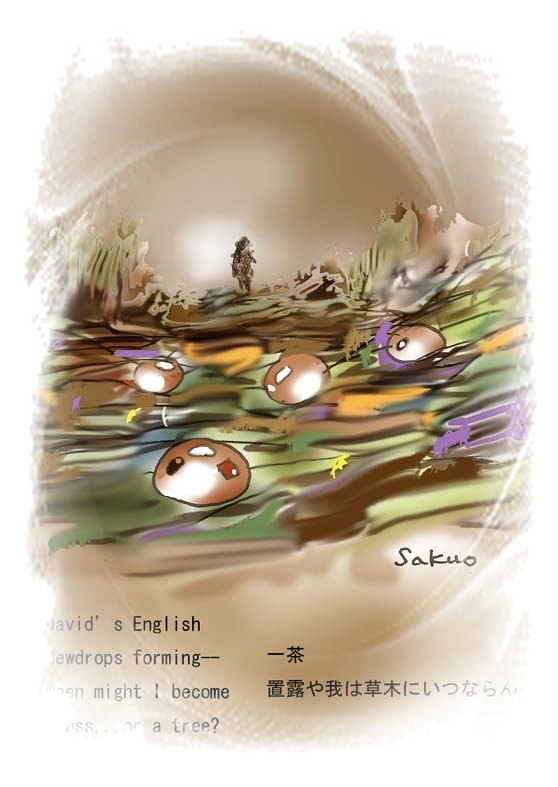
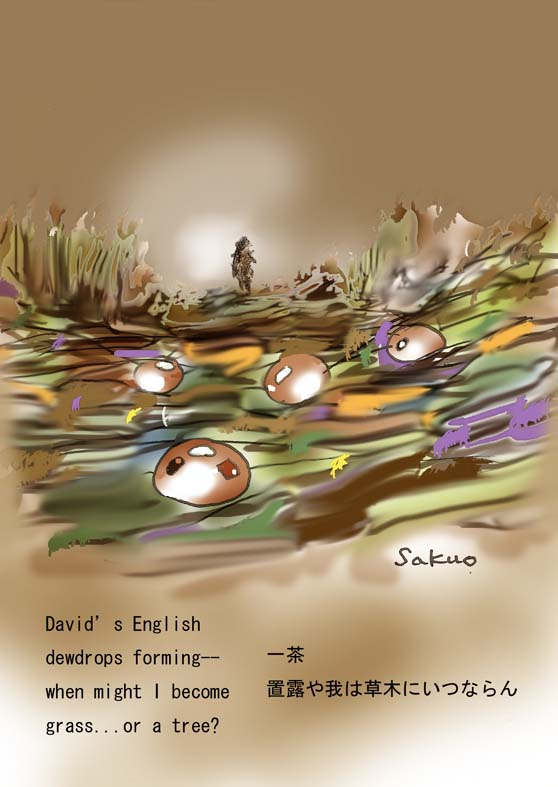
置露や我は草木にいつならん
oku tsuyu ya ware wa kusaki ni itsu naran

David’s English
dewdrops forming--
when might I become
grass...or a tree?


sakuo Renku
自然に戻る時ぞ近づく
shizen ni modoru toki zo tikaduku

returning to Nature
the time come up

Monday, July 17, 2006

Poor General


1804
一茶
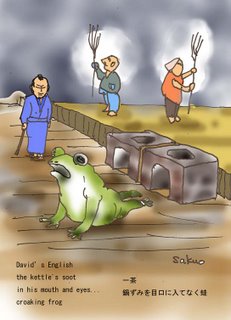
鍋ずみを目口に入てなく蛙
nabe-zumi wo meguchi ni irete naku kawazu

David’s English
the kettle's soot
in his mouth and eyes...
croaking frog

David’s image
Someone (Issa?) is cleaning soot from a kettle, some of which is getting into the frog's mouth and eyes.

1804
age 42 years, leaving from Katsusika sect, study at Natsume who was his teacher as well as rich sponsor helping Issa’s life.

sakuo’s image
The frog is Issa who was poor and need help of Natsume, at whose house Issa visited everyday for getting meal and money. He did housekeeping works, for example, sweeping soot, repairing screen and everything. He was called as poor general or poor god.

sakuo’s Renku
皆が笑う貧乏大将
minna ga warau binbou-taisyou

All laugh at me
Poor General

Sunday, July 16, 2006

Chiyoni's well bucket


year unknown

一茶
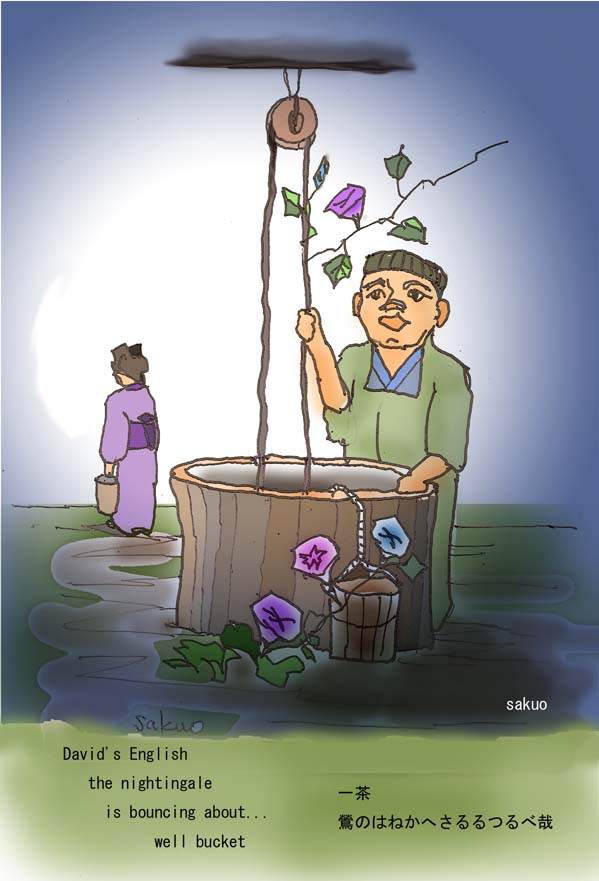
鶯のはねかへさるるつるべ哉
uguisu no hanekae saruru tsurube kana

David's English
the nightingale
is bouncing about...
well bucket

David’s image
I picture a nightingale landing on a hanging bucket that starts rocking wildly up and down: an ephemeral moment captured in haiku.

sakuo's image.
The nightingale is Issa who lived in 1763—1827
The most famous haiku related to [well bucket] made by Chiyoni lived in 1703—1775
So when Issa look at well bucket, he reminded Chiyoni.

sakuo's Renku
朝顔つるべ
千代尼に参った
asagao turube chiyoni ni maitsuta

the well bucket and morning glory
I surrender to Chiyoni

Friday, July 14, 2006

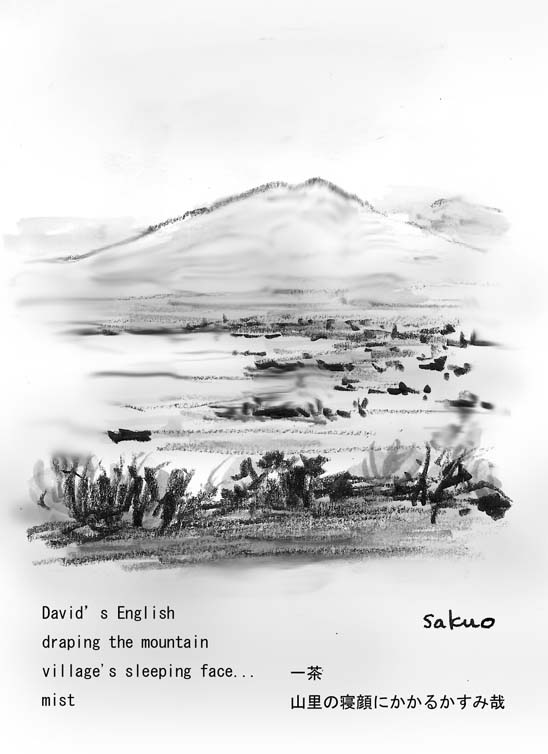
self portrait

dream for ever

1806

一茶
山里の寝顔にかかるかすみ哉
yama-zato no ne-gao ni kakaru kasumi kana

David's English
draping the mountain
village's sleeping face...
mist

sakuo's Renku
夢の続きを何時までも
yume no tuduki wo itumade mo

wish the dreams
continuing for ever

Wednesday, July 12, 2006

Sandy san

Sandy san,
I don'nt know how to up load image file to WHC-m.
So I show you my remaking of your Haiga at here.
If it would be helpfull for your imagination, I am very appriciated.


sakuo.

Monday, July 10, 2006

old pine tree


1810
一茶
古松や我身の秋が目に見ゆる
furu matsu ya waga mi no aki ga me ni miyuru

David’s English
old pine--
my own life's autumn
fills my eyes

sakuo Renku
去られ恨まれ疑われし身

be leaved be hated
and be suspected
it’s me

David's Comment
Issa sees in the old pine(s) a reflection of his own aging self. In another version of this haiku, he ends with ano tôri ("is like that").

sakuo's Comment
1810, Age 48.
Negotiations over his inheritance take place.
on May, back to native village for the negotiation, but failed .
on June , visiting the grave of Kakyo, his femal student whom he would love.
on November, being involved in money trouble with Natume,who was his teacher and sponcer, injured very much.

Sunday, July 09, 2006

soba noodle and Zenko-Temple

1813

一茶
有明やあみだ如来とすす祝
ariake [ya] mida nyorai to susu iwai

David’s English
daybreak--
Amida Buddha's soot
is swept

sakuo Renku
箒を置いて蕎麦善光寺
houki wo oite soba Zenko-ji

put down brooms
soba noodle Zenko Temple

Monday, July 03, 2006

now a bride coming

1824
Issa
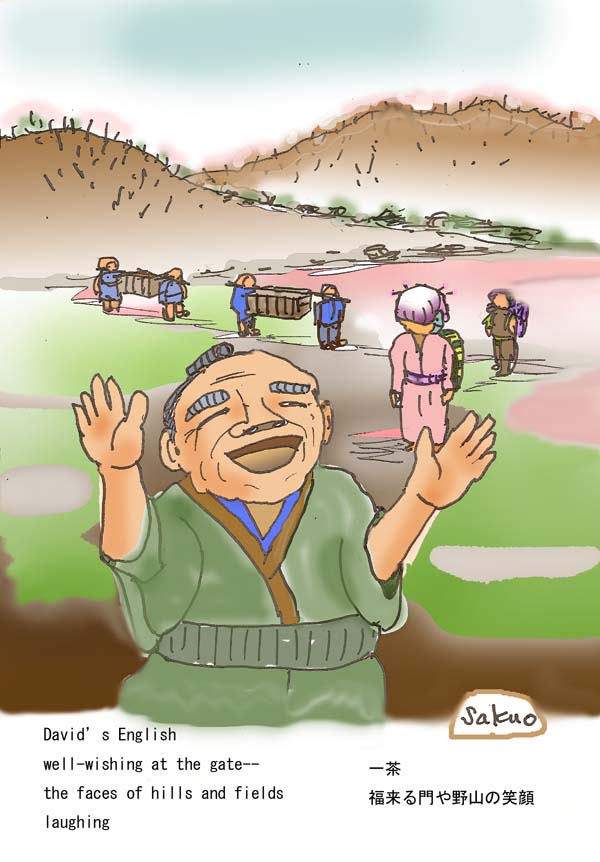
fuku kitaru kado ya noyama no warai-gao

David’s English
well-wishing at the gate--
the faces of hills and fields
laughing

sakuo prefaced.
Issa has lost his first wife before year.
He has hard time in daily life as well as being lonely.
On the fifth month a new bride has come.

sakuo Renku
haruyama koete yome no kuru kana

over spring mountain
now bride coming

Sunday, July 02, 2006

frog and son too

year unknown

Issa
ôenoki kotate ni totte naku kawazu

David’s English
the big nettle tree
as his shield...
croaking frog

sakuo Renku
jinya no segare naki wameki tari

a son of lodge Lord
crying and weeping

http://cat.xula.edu/issa/